
Harnessing Efficiency: Warehouse Automation in the Solar Energy Revolution
June 25, 2024
Is manual handling impacting your inventory efficiency in the solar industry?
In today's rapidly advancing world, the solar energy sector stands at the forefront of sustainable innovation. As demand for solar panels continues to rise, manufacturers are challenged to streamline their operations efficiently. One key area where improvements can significantly impact their competitiveness is warehouse management. Here's why solar manufacturers and their customers can benefit immensely from embracing our Craftsman Warehouse Automation.
Summary
Craftsman Automated Storage and Retrieval System and Warehouse Management System make it easier for solar manufacturers to pick, pack and manage inventory. This reduces mistakes made by people, makes the workplace safer and uses space efficiently. Because everything is tracked in time, customers get their orders faster and more reliably.
Automation Solutions for Solar Industry
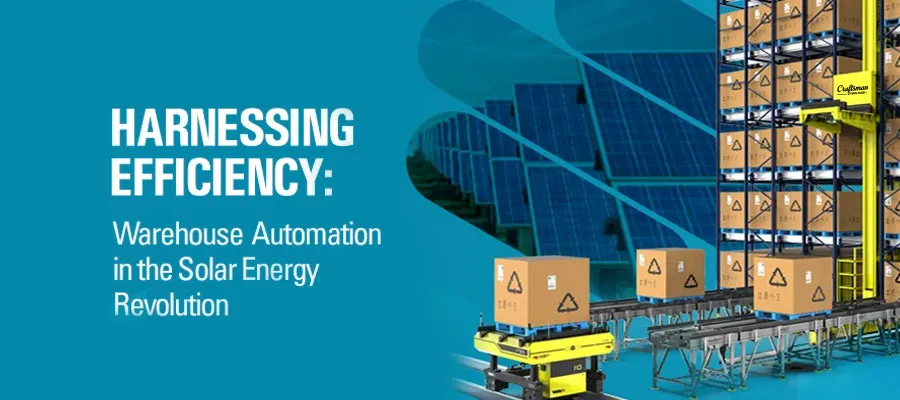
Our Warehouse Automation refers to the use of technologies such as,rail guided vehicles (RGVs), and advanced WMS software systems to optimize warehouse operations. For solar manufacturers, whodeal with large volumes of raw materials and finished goods can revolutionize their supply chain. Our Automated Storage Systems can efficiently handle inventory management, picking, packing, and shipping processes, thereby reducing human error, improving accuracy, and enhancing overall productivity. This translates into faster order processing times, reduced lead times, and ultimately, increased customer satisfaction.
Benefits of Warehouse Automation
Moreover, Our Warehouse Automation enhances safety by minimizing the need for m anual labor in potentially hazardous environments. It also allows manufacturers to utilize their warehouse space more effectively and accomodate larger inventories without increasing physical footprint. For customers of solar manufacturers's installers, distributors, and businesses involved in renewable energy the benefits are equally significant.
By integrating our Warehouse Automation into their operations, Solar Manufacturers can offer customers a more reliable supply chain experience. This reliability is crucial in an industry where project timelines hinge on the timely arrival of components.Furthermore, automation enables manufacturers to provide real-time visibility into inventory levels and order statuses. Customers can access this information through integrated systems or portals, allowing them to plan their projects more effectively and minimize downtime. This transparency builds trust and strengthens the manufacturer-customer relationship, fostering long-term partnerships.
In addition to operational efficiency and reliability, Warehouse Automation supports sustainability goals within the solar industry. By optimizing energy usage and minimizing waste through precise inventory management, manufacturers can reduce their environmental footprint. This aligns with the broader mission of the solar energy sector to promote clean energy solutions and sustainable practices.
Conclusion
The adoption of Warehouse Automation is an opportunity for solar manufacturers to improve their overall productivity. By embracing software-integrated technologies, manufacturers can streamline warehouse operations, enhance efficiency, improve reliability, and engage in sustainable practices. Automation ensures a more seamless procurement process, increased visibility, and ultimately, better project outcomes for customers. As the solar industry continues to evolve, leveraging Warehouse Automation will be essential for staying competitive and meeting the growing demand for renewable energy solutions.
In essence, Warehouse Automation isn't just about embracing technology”it's about paving the way for a more efficient, reliable, and sustainable future in solar energy.