
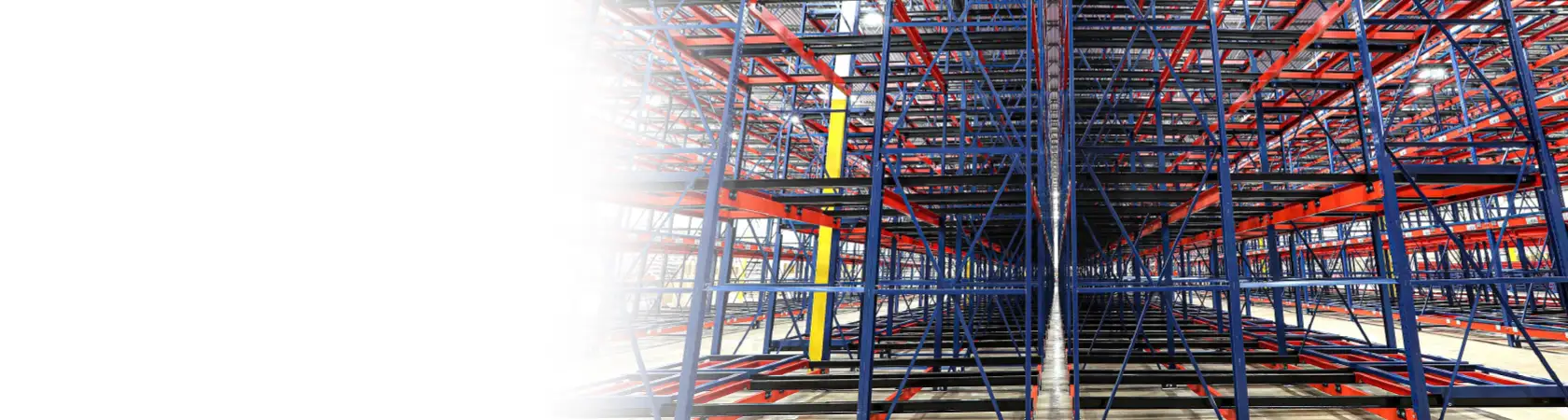
Push-Back Racking
Dynamic racking systems that increase storage density and accessibility.
- Home/
- Products/
- Static Storage/
- Industrial Racking Systems/
- Push-Back Racking
Push-Back Racking
When it comes to storing the same SKU at pallet level with medium density, Push-Back racking is one of the preferred options. Last-In-First-Out (LIFO) is used with Push-Back Pallet Racking, which saves space.
Summary
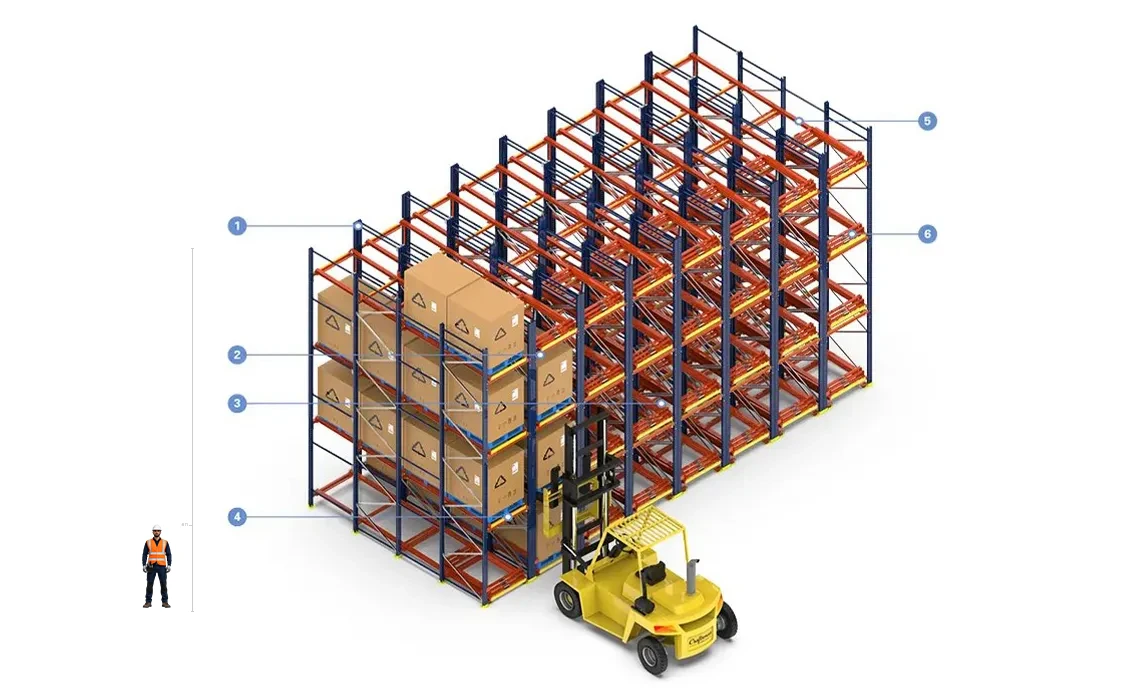
Craftsman Push Back Racking manages LIFO (Last In, First Out) by the dynamic structure of storage. Push Back Racking allows 2-6 pallets to be stored in inclined rails. Push Back Racking by Craftsman benefits in space optimisation and selectivity.
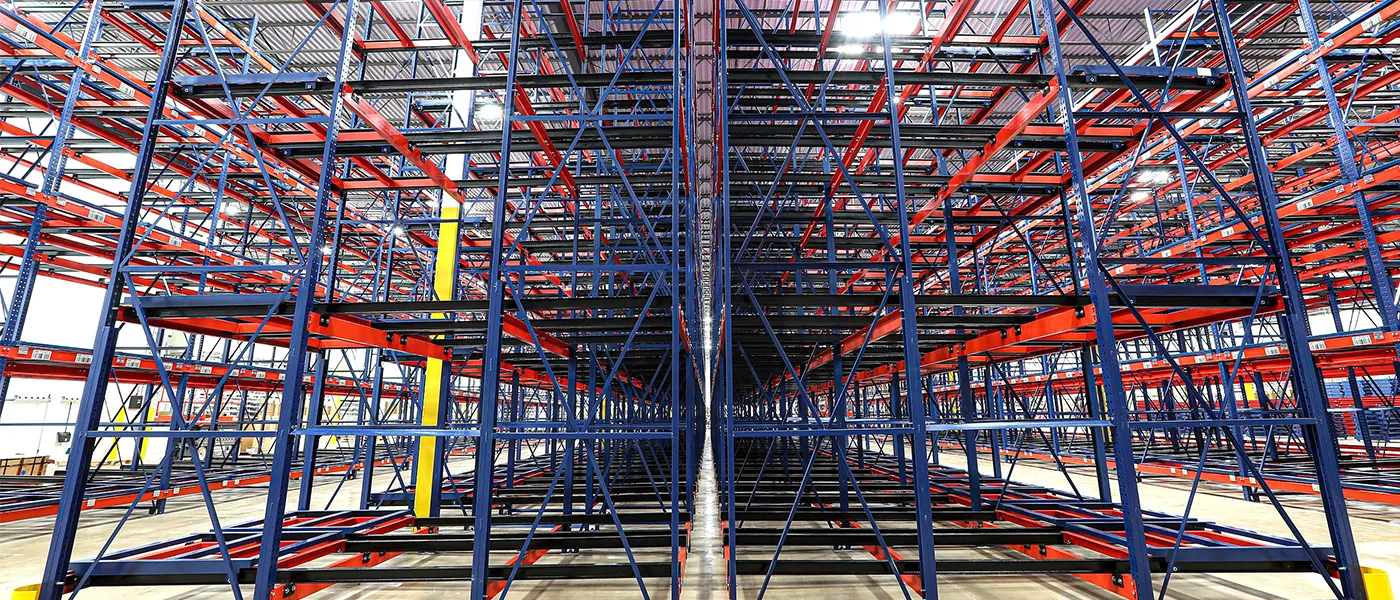
What are the Benefits of Push-Back Racking?
Also, Push-Back Pallet Racking Systems are appropriate for holding several pallets of the same SKU. All our pallet lanes operate independently, thereby offering a flexible and dense pallet storage option.
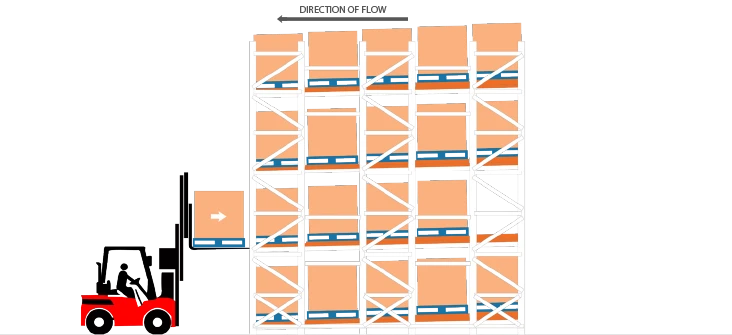
Once a pallet is unloaded on our systems, the remaining inventory replaces the position of the front pallet by a sliding cart that utilizes gravity, ensuring the uninterrupted availability of a pallet in picking faces. Our Push-Back Pallet Racking System can be accessed with all major types of forklifts, including counterbalance, narrow-aisle, and swing reach lifts. Also, they are compatible with an extensive range of accessories such as collision protection, MHE stopper, etc.
Provides more storage rack area with a single-aisle design

Low Maintenance Cost

Designed for safe operation
Allows for quicker and easier loading/unloading of pallets
Side View
Advantages of using Push Back Racking
- 01Offers better use of available space than most systems
- 02Minimizes honeycombing effect in the warehouse
- 03Allows increased storage of SKU’s
- 04Provides more storage rack area with a single-aisle design
- 05Allows for quicker and easier loading/unloading of pallets
- 06Low-maintenance costs
- 07Saves on labor and labour risks by avoiding both the removal of obstructive pallets by forklift drivers and direct entry of employees channels for goods retrieval
Frequently Asked Questions
Push-Back racking is a type of high-density pallet storage wherein pallets are stored multiple positions deep on inclined rails or trolleys. When a new pallet is added to the system, it pushes the previous pallet back, making sure that the pallets are always easy to reach from the aisle face. This cuts down on handling time and increases throughput.
Mostly, it is found in warehouses, distribution centers, and manufacturing units that deal with the storage of multiple pallets for the same SKU. The operations of such industries include fast-moving consumer goods (FMCG)
One of the primary savings that a Push-Back pallet rack can bring to warehouses is traveling by forklifts to the rear of most rack faces due to all aisles being eliminated. The system reduces operational bottlenecks and improves overall productivity while keeping the pallets in an easily accessible position.
Push-Back Racking is suited to keep medium-turnover stocks for which FIFO is not compulsory. This storage works better for branding different SKUs, wherein multiple pallets of similar SKUs must be kept in a single lane to have an efficient space while simplifying handling.
Yes, Push-Back Racking has a set of braking systems preventing unnecessary movement of the pallets along the rails. These safety devices prevent backward movement in the event of a failure or emergency, ensuring that the system is safe for daily operations in a warehouse.
This system has flexibility; the reconfiguration or expansion can always be done as the business changes the SKU types or pallet depth, or entirely changes the amount stored. Therefore, businesses can scale their storage without needing major structural changes.
Push-Back Racking achieves an excellent compromise between high storage density and rapid access to the pallet. The improved utilization of space and throughput, and therefore ROI, returns faster with time.